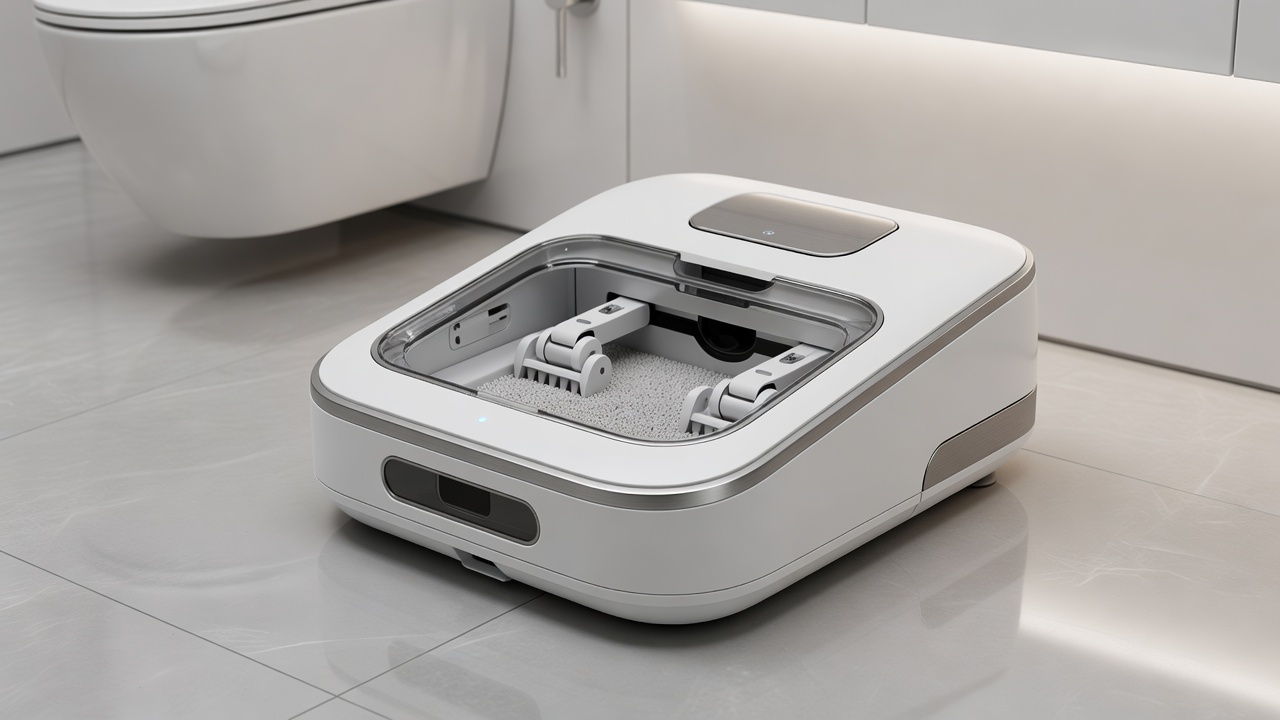
How They Work: Raking vs. Rotating
Automated litter boxes handle waste removal using one of two primary mechanical approaches. The design you choose dictates the type of litter you must buy and the maintenance footprint.
1. The Raking Mechanism
These units resemble traditional rectangular litter pans but feature a mechanical arm fitted with a rake. Following a delay after the cat exits, the rake sweeps horizontally across the litter bed, pushing clumps into a sealed receptacle at the end of the unit.
- Advantages: Generally lower profile, familiar shape for cats accustomed to standard pans. Less expensive upfront.
- Drawbacks: Rakes frequently jam if waste clumps are too large, adhere to the bottom, or if soft waste gets caught between the tines. This can lead to a messy, manual cleaning process that defeats the purpose of automation. They require high-quality, hard-clumping litter.
2. The Rotating Globe (Gravity-Sifting)
The current premium standard in the industry. The cat steps into a large, spherical chamber. During a cleaning cycle, the entire globe rotates slowly. A built-in mesh screen sifts the clean, granular litter into a holding cavity, while the large waste clumps slide down into a waste drawer located in the base. The globe then rotates back, returning the clean litter to the bottom.
- Advantages: Highly reliable because it relies on gravity rather than a rake pushing through heavy clay. Far less prone to smearing or jamming. Excellent odor control due to sealed base drawers.
- Drawbacks: Expensive, takes up a large vertical footprint, and visually imposing for timid cats.
Crucial Safety Sensors
Automation requires strict safety failsafes; moving machinery cannot operate while an animal is inside. Look for multiple redundant sensors:
- Weight/Pressure Sensors: Located in the base or step, these detect when a cat enters. The cleaning cycle should pause immediately if a cat steps in during operation.
- Infrared (IR) Sensors: Often placed across the entrance to detect motion. If the beam is broken, the unit halts.
- Pinch Sensors: Vital for rotating globes, these detect resistance on the moving parts to prevent trapping paws or tails.
Managing Odor and Maintenance
While self-cleaning boxes remove waste from the surface, they do not make waste vanish. The clumps sit in a receptacle drawer. The quality of odor containment is directly tied to the seal on this drawer.
Look for units with activated carbon filters built into the waste drawer vents. Even with automation, you must still empty the drawer and top up fresh litter regularly—usually once or twice a week for a single cat, or every few days in a multi-cat household.
Acclimation Strategies
Cats are notoriously suspicious of environmental changes. Never abruptly swap a traditional box for a loud, moving robot. Place the automated unit next to the old box but leave it unplugged. Allow the cat to use it as a traditional box for a week. Once they are consistently using the new unit, plug it in and run cycles manually while the cat is safely out of the room to let them accustom to the motor noise.