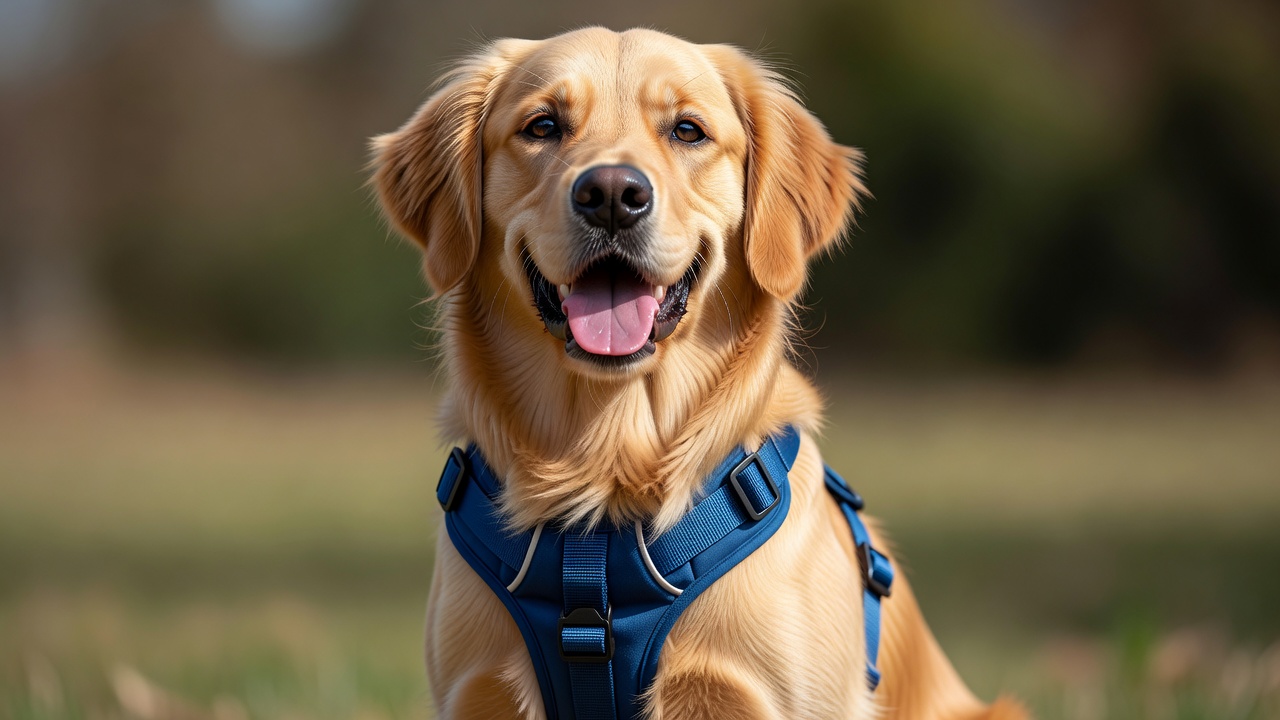
Why Choose a Harness Over a Collar?
The primary advantage of a harness is load distribution. When a dog pulls on a traditional neck collar, the concentrated force can lead to tracheal collapse, spinal injuries, and increased intraocular pressure (pressure in the eyes). A harness displaces this kinetic energy across the dog's chest, shoulders, and upper back, mitigating the risk of physical trauma during sudden lunges or sustained pulling.
Types of Harness Mechanics
Not all harnesses function the same way. The attachment point dictates the leverage you have over the dog's center of gravity.
1. Back-Clip Harnesses
On a back-clip harness, the leash attaches to a D-ring positioned between the dog's shoulder blades. This is the most common and generally the most comfortable design for dogs. It prevents the leash from tangling under the dog's front legs and does not impede their natural gait.
- Pros: Highly comfortable, easy to put on, great for running or hiking.
- Cons: Does not discourage pulling. In fact, for dogs with a strong opposition reflex (like Huskies), it can actually encourage them to pull harder, akin to sled pulling.
- Best For: Small breeds, dogs with respiratory issues, and well-trained walkers.
2. Front-Clip (No-Pull) Harnesses
Front-clip harnesses position the leash attachment at the center of the dog's chest. When the dog pulls forward, the tension naturally steers the dog's chest and shoulders to the side, turning them back toward the handler. This mechanical disadvantage makes pulling ineffective.
- Pros: Immediate reduction in pulling behavior, provides the handler with greater directional control.
- Cons: The leash can easily tangle under the front legs. If poorly fitted, the chest strap can sag or restrict shoulder movement (shoulder dysplasia).
- Best For: Strong pullers and large, difficult-to-control breeds.
3. Dual-Clip Harnesses
Offering the best of both worlds, dual-clip harnesses feature attachment points on both the back and the chest. Handlers can use a double-ended leash for maximum control in high-traffic areas, or switch between clips depending on the training scenario.
Ergonomics and Fit
A poorly fitted harness is worse than a collar. It can cause severe chafing, restrict joint movement, and even alter a dog's long-term musculoskeletal development.
The Y-Shape vs. T-Shape Debate
Harnesses generally fall into two structural shapes when viewed from the front:
- Y-Shape: The straps form a 'Y' over the dog's chest, resting on the sternum and looping between the front legs. This design leaves the shoulder joints (scapula) completely free to extend. Veterinarians and canine sports medicine experts heavily favor Y-shaped harnesses for active dogs.
- T-Shape (Horizontal Chest Strap): The strap sits horizontally across the dog's chest and shoulders. While easier to put on, this design acts like a seatbelt, physically impeding the forward extension of the front legs. Over time, altering a dog's natural gait can lead to joint stress.
Materials and Construction
When assessing quality, look closely at the materials used:
- Webbing: High-density nylon is standard for its high tensile strength. Tubular nylon is softer and reduces chafing compared to flat nylon.
- Hardware: Heavy-duty, acetal plastic buckles (like YKK) offer excellent durability and are weather-resistant. D-rings should ideally be forged metal (no weld seams that can snap under pressure) or lightweight aerospace aluminum.
- Padding: Neoprene or closed-cell foam prevents chafing in short-haired breeds. Avoid overly bulky harnesses for double-coated breeds, as they can cause overheating.
How to Ensure a Proper Fit
Always measure your dog's girth (the widest part of the ribcage behind the front legs) and lower neck before purchasing. Once adjusted on the dog, you should be able to slide exactly two fingers flat between the harness and the dog's body. Ensure the armpit straps sit far enough back to prevent rubbing against the sensitive skin behind the front legs.